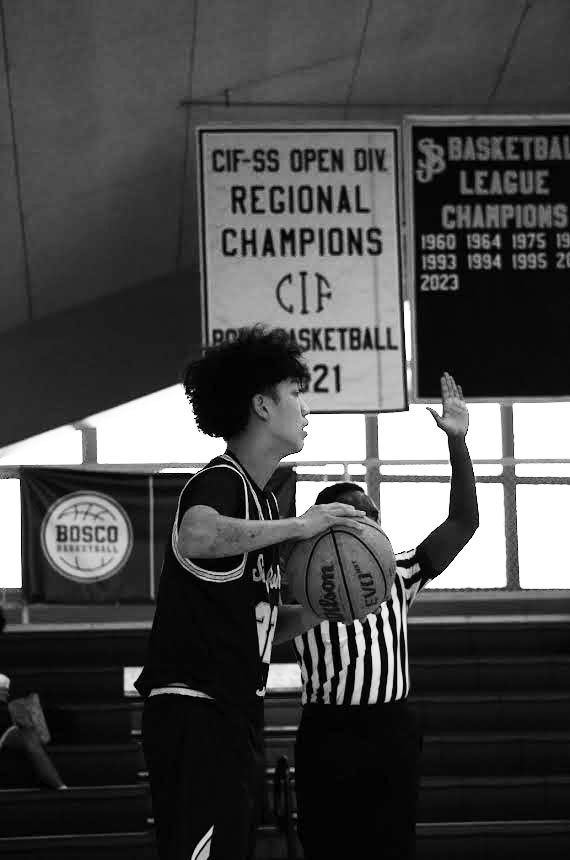
To stand out among their competition, many young athletes have had to become social media gurus. Today, a polished profile and clever self-marketing tactics are not just admired, but expected by coaches, recruiters, and peers.
Costly media days, self-hired photographers, and strategically compiled highlights are just a few of the ways players can market themselves. In the process, success can become more about acknowledgement and less about personal achievement.
“We’re encouraged to put ourselves out there. Sometimes that means paying extra for the better photographer, or spending extra time to make a post look better, but it pays off with recognition,” equestrian and freshman Lilly Rogge said.
In the equestrian world specifically, that recognition comes at no small price. Skilled, prestigious private photographers that specialize in capturing horse shows are as hard to come by as they are expensive to hire.
“Good equestrian private photographers can get in the thousands range, but normally the high hundreds for one competition week. It’s not something I always do, but for championships and new heights, I think it’s worth the price. Our rounds are competition first, but exposure on the internet for possible scholarships and exposure is a big part of it too,” said Rogge.
Especially in, but not limited to, the youth soccer scene, media day is a common way clubs enable their players to publicize themselves. Traditionally, the club hires a set of photographers and rents out a venue, dedicating a day to procuring photos and video clips that are used in club/team advertisements along with individual recruitment profiles and player-profiling websites.
Even more with the nature of recruitment and scholarship, the competitiveness of social media and youth sports tend to magnify each other. It is a constant cycle of seeing other people’s accomplishments, and setting them against your own. That dynamic can get overwhelming, and distract from the reality; that success looks different for every athlete.
“Scrolling through Instagram, you could be the best player in the world and still feel like you’re behind. It feels like everyone is constantly upping the ante on each other. And you only see everyone’s best. It’s easy to forget that we all have lows, too,” said freshman soccer player Kolleen Lem.
Athletes learn to curate their image almost as a job applicant would, in order to appeal to coaches and recruiters. Between career highlights, academic statistics, and overall professionality, however impressive their profile is can tell how desirable of a player they are.
Often included in a player’s bio or description are their GPA, school, graduating year, organization, and most notable accomplishments within their sport. The profile serves similarly to a resume, indicating what they offer both athletically and academically.
“It does take away from the fun. We all dream of playing in college, but it comes with a price. It’s like, if you want to get recruited you have to treat it [soccer] like your job, and come off as a professional,” said Lem.
That responsibility is larger than just personal, as a player’s image can contribute to that of their organization.
Even in situations where a young athlete may not be considering recruitment or self-promotion, it is still expected of them to represent their organization honorably.
“Really our whole aim as cheerleaders is to give PVHS the right reputation. It’s important to always think twice before we post something, to make sure it’s spreading positivity, and doesn’t come off the wrong way,” said cheerleader and freshman Sabrina Agrusa.
“So many people see what we post. You have to think about, ‘what kind of person do I look like by posting this?’ and really consider how you want to be seen,” said Agrusa.
In making sure what they put out positively reflects their organization, athletes learn applicable lessons pertaining to reasoning and thoughtful decision-making. Social media familiarizes young athletes with navigating issues such as comparison and self-advocation, which will persist as obstacles in any endeavor they choose to take.
The ability to use and understand social media effectively is advantageous to have as an athlete in any sport. It means knowing how to present oneself with professionality, positivity, and value, which is a skill set today’s athletes will continue to apply for the rest of their lives.