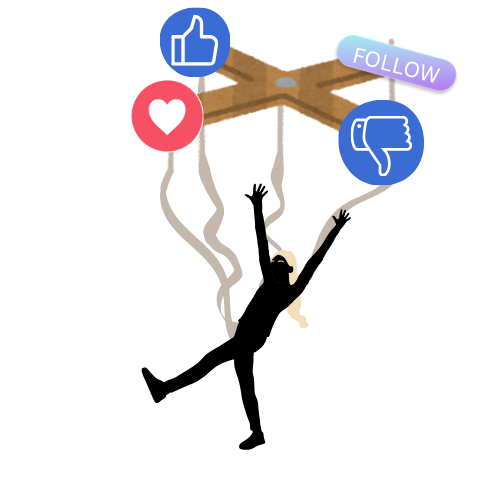
Somewhere along the way, being famous became synonymous with being expected to comment on politics.
Society tends to scrutinize celebrities, treating every little thing they do as front page news. This can be what they wear, what they eat, who they date, and of course, which political figures they support.
Influence however, does not equal expertise. A large platform can amplify a voice, but that doesn’t necessarily mean that it’s a good one.
People choose to listen to celebrities when they are saying what they want to hear. When celebrities align with a popular opinion, they are praised for “using their platform.” However when that same platform voices unpopular views, it is framed as dangerous and irresponsible.
In both cases, a spotlight will be shined, and everything becomes judged by what seems like the entire world.
With fame, mistakes can no longer be ignored and instead have immense consequences. Such consequences can be angry fans sending threats to people and the media suddenly having an opinion on everything.
Constant scrutiny magnifies mistakes, and individuality is reduced to a political stance rather than a human perspective.
It isn’t fair to expect celebrities to voice their opinions if the public doesn’t respect them.
For example, Taylor Swift received tremendous backlash when she spoke out against Donald Trump.
As an extremely influential figure around the world, her opinion caused uproar amongst some of the public. She lost some followers, and gained some. But this is despite the fact that her job is to make music, not to voice politics. Trump even responded to this saying, “I like Taylor’s music about 25% less now.”
Actress Gillian Anderson articulated this boundary clearly, saying she avoids voicing her opinion on major political views because she does not really understand the “very very complex issues,” adding that having a platform does not make her opinions more valid than anyone else’s. “not for a second am I going to pitch in, because I don’t really know what it is I’m talking about.”
Celebrities who stay silent, like Anderson, risk being judged by the public as disengaged and uneducated.
However, the double standard also critiques them when they are loud.
Influencers and celebrities are no longer allowed neutrality.
They are expected to constantly perform awareness, activism, and alignment, no matter how informed they are on the topic.
Celebrities are just normal people, they are not all geniuses, elected officials, or activists by default.
Choosing not to speak out should be recognized as a boundary, not a failure.