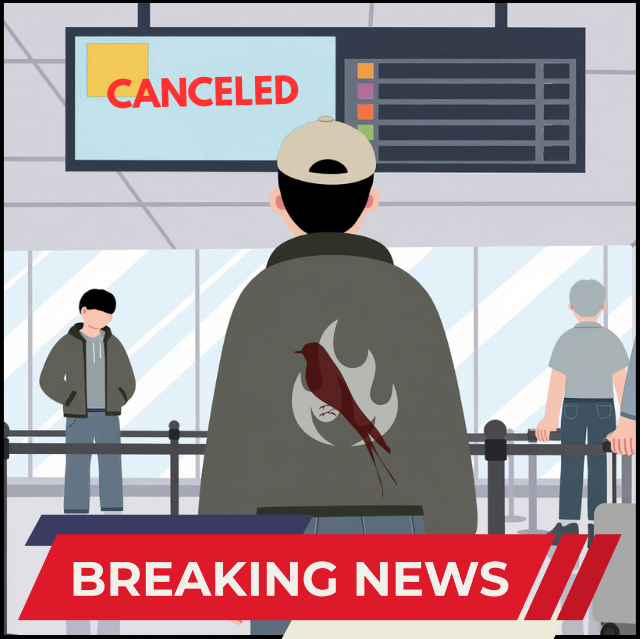
As winter break approaches, the airport quickly becomes the busiest and worst place to be.
Families roll their overpacked suitcases through the crowded holiday rush and wait for what seems like hours. To make matters worse, the recently ended government shutdown has caused widespread flight cancellations.
But why is this happening?
The airlines in the United States heavily rely on subsidies, financial assistance from the government in order to operate, and so when the government is down, this funding goes down as well.
If these airlines don’t make the required revenue, they struggle to pay their workers and to cover other expenses, meaning people will lose their jobs.
“United and Delta, all the major airlines in the United States–if they don’t generate enough revenue to cover those costs, they are going to be in deficit, which is not a good thing if you’re a business,” economics teacher Chris Wilson said.
So, as the airlines lose this support, flights begin to cancel at rapid rates.
And during a very busy time of the year, this causes people to go into panic.
“It’s concerning to travel, because all these flights are getting canceled, and people are stuck at the airport. My parents are worried to let me go because I fly alone,” sophomore Layla Pourmohsen said.
Online, some people have gone as far as comparing the U.S. government to the control-heavy world of “The Hunger Games” book series and franchise.
Social media presents parallels from real life to cinematic moments; some accurate, others exaggerated.
Is it nothing more than a political analogy? Or is there more truth to it?
“We’ve had plenty of government shutdowns in the past, a lot haven’t lasted as long-I would disagree with the label of calling it dystopian,” said Wilson.
Although these comparisons aren’t about eerie visuals or fiction, they come from the feeling of unpredictability caused by the sudden cancellations.
The reality behind this however, is still financial rather than dystopian.
During the shutdown, which ended November 12, 2025, cancellations reached a high of 6% at major airports over the span of 43 days.
Nonetheless, anyone and everyone affected by this are likely to fully come back.
The impact was significant, but temporary.
With things returning to normal, airlines are seeing fewer disruptions and flights will be back on track as the holiday season continues.
“I think everything’s cyclical. I think we’re gonna suffer in the short term, but in the long run, those flights are gonna come back,” Wilson said.